
What Is Keum Boo? The Ancient Korean Technique Behind My Gold and Silver Jewellery
One of the techniques I use a lot in my work is keum boo, and I thought it was about time I actually wrote about it properly. It's the first in a little series I'm doing on the decorative techniques I use, so if you've ever wondered how some of my pieces get that black and gold contrast, this is how.
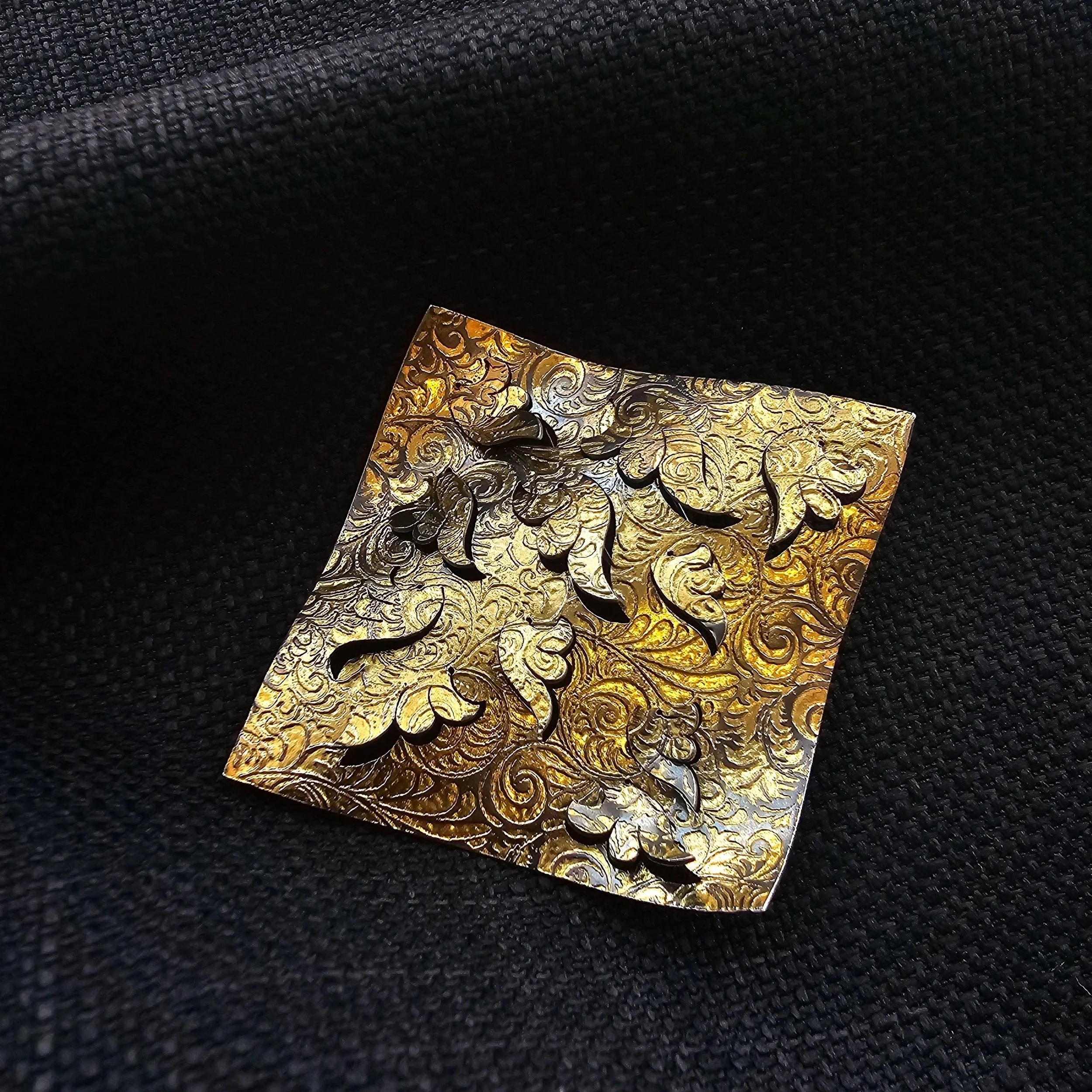
Pattern Brooch by Rachael Plassard - Keum Boo on an etched surface
What Is Keum Boo?
Keum boo is an ancient Korean technique for attaching 24ct gold foil to silver, and it's genuinely one of the most beautiful and simple processes I know: no solder, no glue, just heat and pressure. The name literally means "attached gold," and it's thought to date back as far as the first millennium BC in Korea, originally used to line bowls and drinking vessels because gold doesn't tarnish the way silver does. The technique spread from there into Chinese and Japanese metalwork too, and eventually into Western jewellery.
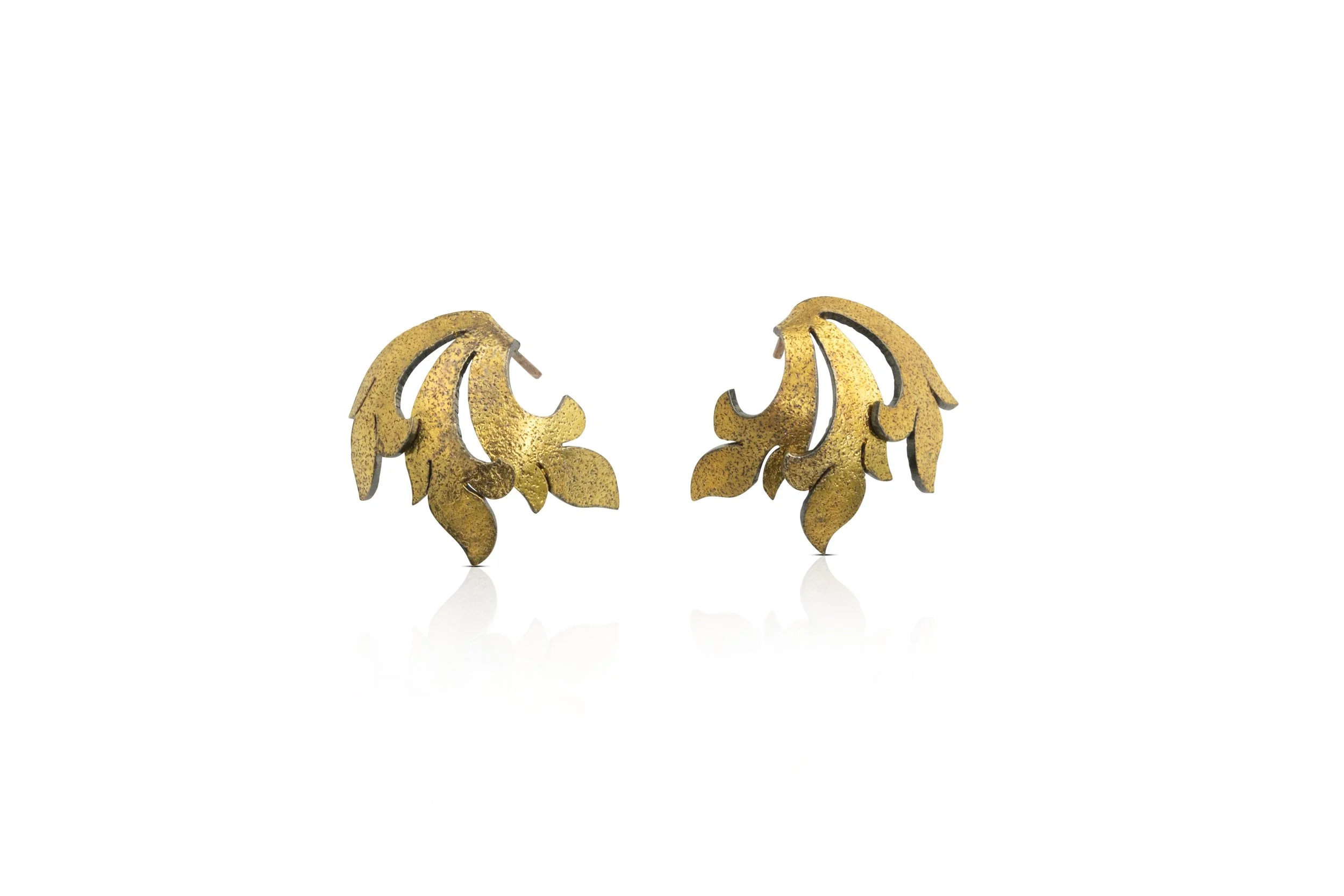
Acanthus Cuff Earrings by Rachael Plassard
How Keum Boo Works
The foil is applied with heat and pressure. I use a burnisher and a hot plate, or a burnisher and torch fire, depending what I'm working on. What's actually happening is a diffusion bond: the heat (somewhere around 260–370°C, well below soldering temperature) causes the atoms at the surface of the gold and silver to exchange and bond permanently. There's even a visual cue for it: the silver develops a faint blue tint when it's reached the right temperature.
I buy 24ct gold foil in different thicknesses. I've used enamelling foil and keum boo foil from Cooksongold, and extra-thick gold foil from Metal Clay. If you want to make your own, you roll it down as thin as you possibly can through a rolling mill, then squish it even thinner between two clean pieces of copper with a bit of oil.
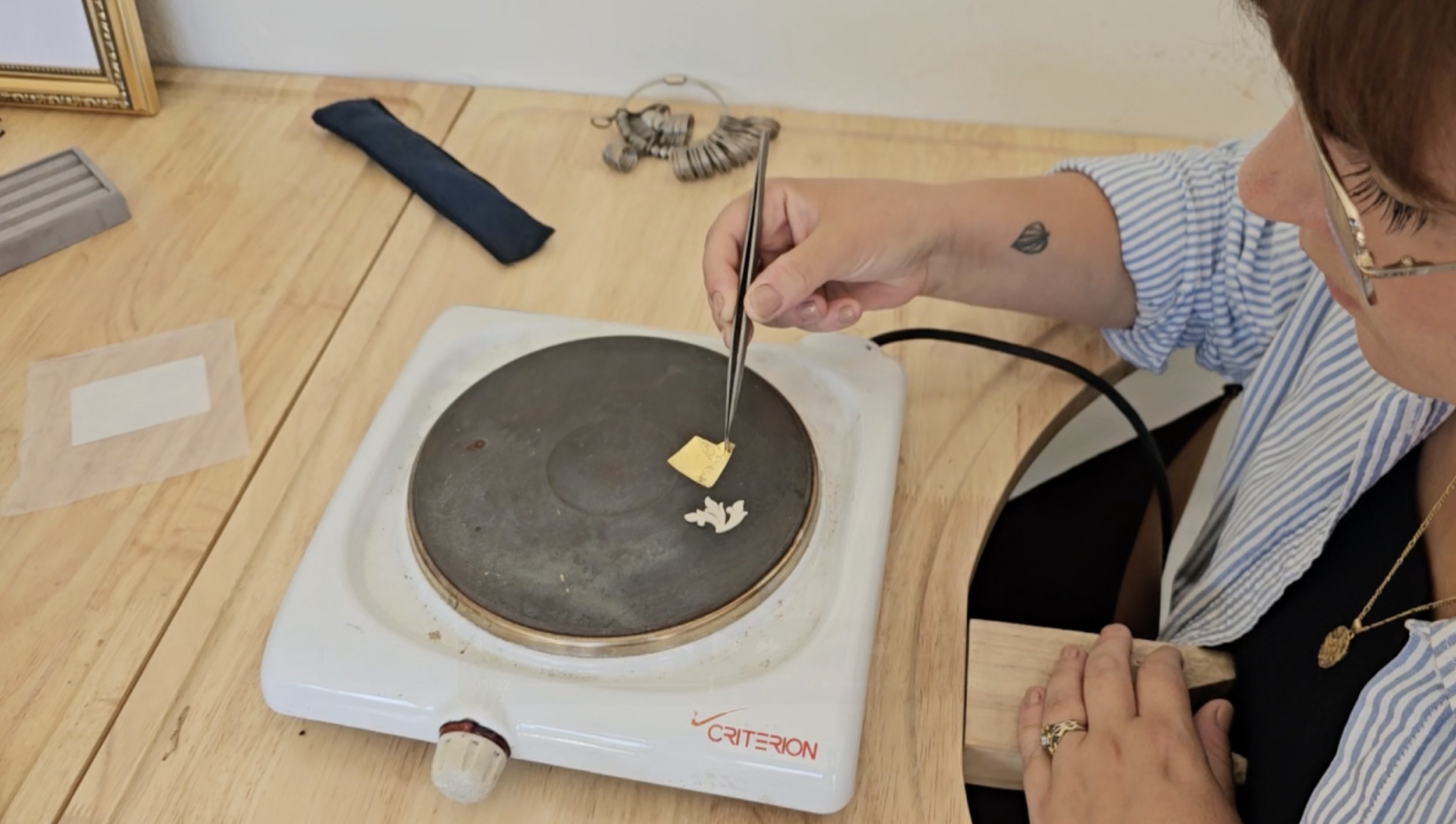
Keum Boo process - Adding the gold foil to the silver over a hot plate.
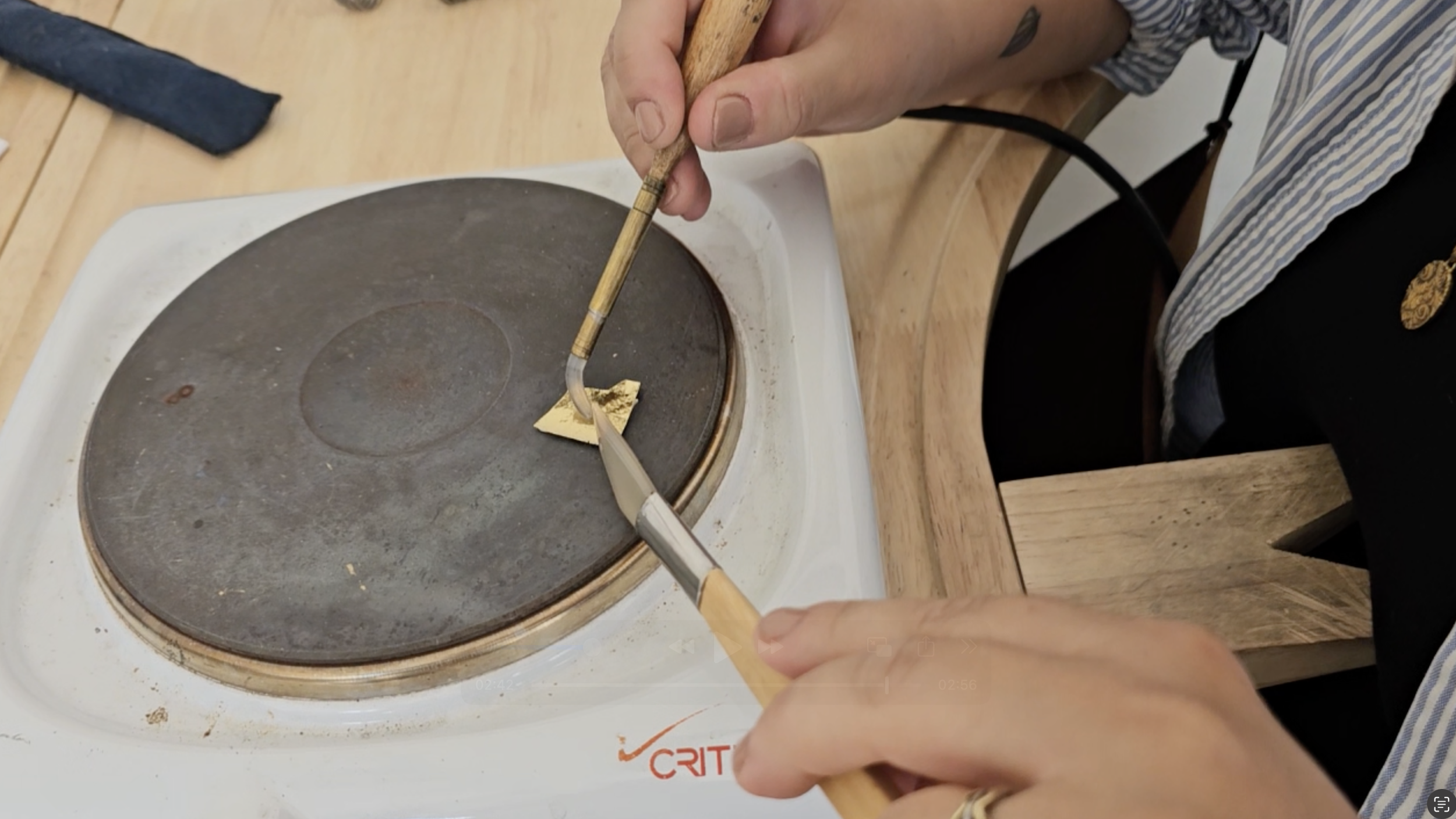
Keum Boo process - Burnishing the gold to the surface of the silver.
How Is Keum Boo Different From Plating?
People always ask me what the difference is between keum boo and gold plating, and it's a fair question because they sound similar. Plating is an electroplating process: the piece goes through a chemical bath and an electric current deposits a thin layer of gold onto the surface, usually only a fraction of a micron up to a few microns thick depending on the piece (a plated ring might only have 3-5 microns of gold on it).
Keum boo uses genuine 24ct gold foil and can be around 13-14 microns thick (depending on the thickness you purchase), six to ten times thicker, and instead of sitting on top as a coating, it's diffusion bonded into the silver, so the gold and silver atoms actually fuse together. That's the real difference: plating wears thin over time, especially on rings or anything that gets a lot of contact, and once it's gone you're back to the base metal underneath. Keum boo doesn't wear off the same way, because it's not sitting on the surface, it's properly bonded into it.
Why Fine Silver? (And What Depletion Gilding Actually Is)
Gold will only bond this way with fine silver, not sterling. So I use sterling silver (because fine silver on its own is too soft for the delicate pieces I make) and depletion gild it before I start, which just means heating and pickling the piece repeatedly (about eight times) to bring the fine silver up to the surface. It's a bit of a faff, but it means I get the strength of sterling with a fine silver surface to bond the gold to.
Finishing Touches
Keum boo looks particularly lovely rolled with a textured surface over the top. I use 80 grit sandpaper through my rolling mill, which gives it an almost sparkly texture. Then I oxidise the piece: the silver turns black and the gold stays gold, and that contrast is one of my favourite things about this technique.
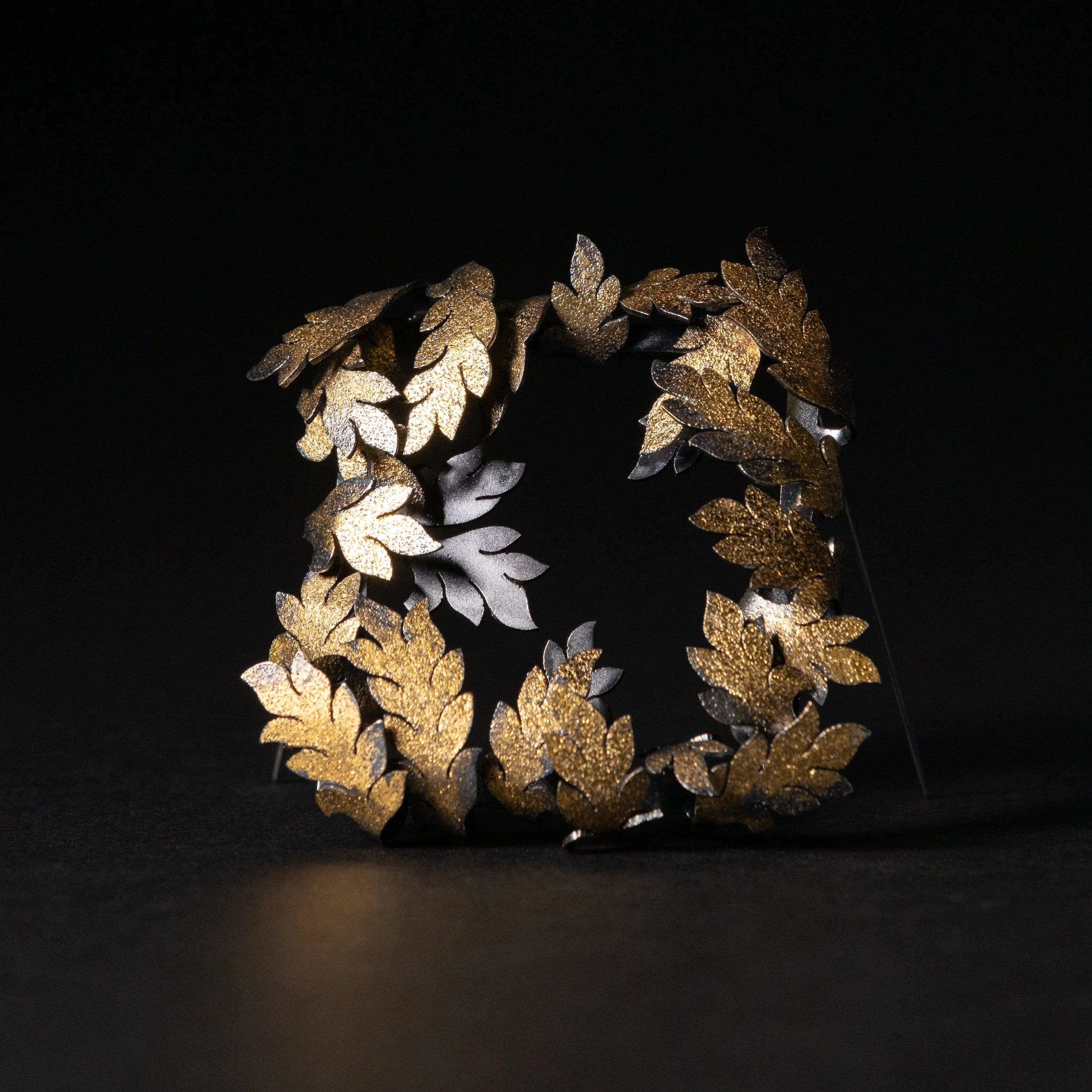
Faded Acanthus Brooch by Rachael Plassard
A Word on Soldering (Because I Do It Anyway)
Most people will tell you not to solder a piece after keum boo, and they're right, it's not really the done thing. But sometimes needs must! If I do need to solder afterwards (an ear post, a jump ring, a brooch finding… nothing complicated), I keep it as quick as possible. Heat it for too long and the gold can start to fade, the two metals keep diffusing into each other the more heat you add, so it loses that crisp gold colour.
Come and Learn It Yourself
I currently teach a full day Keum Boo workshop at Meon Valley Studios (the next one's booked in for 24 October 2026), and I'm working on bringing a version to my own studio, Studio 5 at Hotwalls Studios here in Portsmouth. If that's something you'd love to learn, keep an eye out or drop me a message and I'll let you know when it's ready.
More decorative techniques to come in this series soon!
